 [[{“value”:”
By Kirk McCarley
The Dictionary.com word of the year for 2025 was actually comprised of numbers rather than letters. One might ask, “Should numbers even qualify?,” but apparently, from the perspective of the leading online dictionary and reference website, it passed the standard.
So, what is “6-7?”
Pronounced “six seven” it is an internet meme and slang term that emerged this year on Tik Tok and Instagram Reels. It stemmed from lyrics in a song by rapper Skrilla, with a backdrop of “tall” NBA players in the music video.
The meaning of the term is subject to conjecture; it can arguably coincide with multiple interpretations, including the most non-committal of all elucidations: “whatever.”
Hearing the term transported me back to my freshman year in college and an appealing course alternative entitled “Theater of the Absurd,” a study of a series of unusual and provocative plays including classics such as “Our Town” and “Waiting for Godot.” Tossed into the mix was a 1942 product by Thornton Wilder, “The Skin of Our Teeth,” which envisioned a very cold future earth on the precipice of a new ice age. It was so cold in fact that “dogs are sticking to the sidewalks” and so chaotic and confused that the “world is at sixes and sevens.”
With so many varieties of interpretation and juxtaposition, is it no wonder that we live in a state of consistent misunderstanding? Where is that place where we find a common language with others? How might we make that happen?
First, seek to build connection. That can be discovered through a journey of exploring common places one may have lived, visited, or attended school. Maybe it includes a consideration of family similarities such as kids and grandkids, perhaps hobbies or interests.
In school, substitute teachers are assigned the unenviable task of gaining both the respect and control of the classroom when scheming pupils might have ulterior motives. A consistent sub for me at school was Ms. Winkelman.
Ms. Winkelman would begin class with a “thought question,” such as “when does 9 + 5 = 2?” She would immediately challenge our intellect for one, while at the same time branding herself as a curious and thoughtful adult worthy of respect. She built a connection.
Second, aim for curiosity.
Let’s face it, most of us enjoy talking about ourselves when given the opportunity. Why not appeal to someone’s primal instincts by providing that gift by asking questions of them? Besides, I’ve often heard it said that the way in which we ourselves become interesting is through interest in others.
Third, appeal to the differences you may have with others in an encouraging way.
The entertainer Penn Jillette is part of the Penn & Teller duo, who for years have performed feats of magic and illusion to audiences of millions.
Jillette is also an avowed atheist.
Despite his agnosticism, he makes a compelling challenge to those of faith. “If you believe there is a heaven and hell, and you think it’s not worth telling someone about it, how much do you have to hate him to not proselytize?”
Ms. Winkelman had her thought questions. We can capitalize on building relationships by how we take interest in the stories of others. Non-believer Penn Jillette makes an appeal to those of spiritual faith. One other thing we might consider in outreach to others is to embrace uniqueness, however quirky it might be.
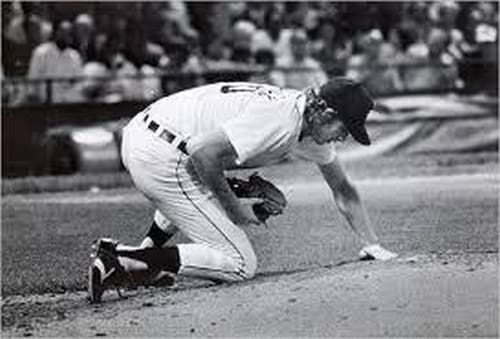
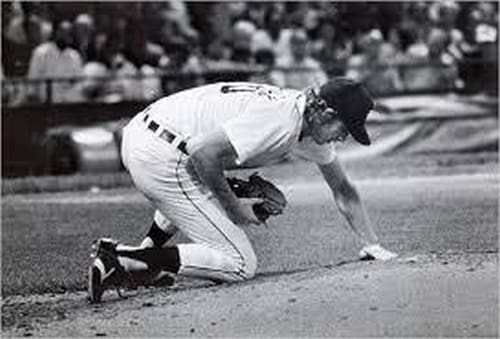
The summer of 1976 was memorable. The US was celebrating its bicentennial. It was a presidential election year, Ford vs. Carter. The Olympic games were happening just across our border in Montreal. And rookie pitcher Mark “The Bird” Fidyrich was dominating batters in the American League as the phenom ace of the Detroit Tigers.
Fidyrich appealed to the “everyman” in each of us through his enthusiastic bouncing around the infield following an out, his precise tending of the dirt around the pitcher’s mound, and his animated verbal communication with an inanimate object—the baseball.
Quirky though the Bird was, he pecked a way into our consciousness.
Let’s each of us seek commonality. Be encouraged and be an encourager.
As to the answer to the “9 + 5 = 2,” find it by locating a regular old non-digital clock.
A graduate of the University of North Texas, Kirk McCarley is a Certified Professional Coach as well as a Professional in Human Resources (PHR) and SHRM-CP Certified. He is also a Production Assistant for both college football and basketball for ESPN and leads group cycling classes as a Certified Spinning instructor. Contact kirk@theseedsowercoach.com, theseedsowercoach.com, or call (314) 677-8779.
The post Finding Commonality appeared first on South Walton Life | 30A News, Events and Community Information.
“}]]
South Walton Life | 30A News, Events and Community Information

Be the first to comment on "Finding Commonality"