Hope in the Cold: How Local Leaders Protect the Unhoused
In Brief:
-
One Hopeful Place and Fort Walton Beach Police activate a coordinated response during freezing temperatures to transport and shelter unhoused individuals safely.
-
Leaders Donna Morgan and Officer “Bhags” Bhagwatsingh emphasize compassion, education, and trust over enforcement while addressing homelessness.
-
Community partnerships, faith-based volunteers, and targeted donations play a vital role in supporting the area’s only cold night shelter.
A cold night can turn bitter quickly for people experiencing homelessness in our community. In the city of Fort Walton Beach, there is only one official cold night shelter — and that safe, warm place is One Hopeful Place. Perhaps the meaning is right there in the name. Hopeful is a powerful word for those with nowhere else to turn. It’s often said that a society is only as strong as its most vulnerable citizens, and the way we treat the less fortunate speaks volumes about who we are as a community. This article highlights two local professionals whose compassion, commitment, and service should make you proud to call this area home.
While my intention with this article was to help spread the word about the only cold night shelter in Fort Walton Beach, it quickly became clear that this is only the tip of the iceberg. Addressing homelessness requires more than emergency shelter — it requires education, compassion, and awareness from the entire community. Now more than ever, those efforts are essential to supporting our most vulnerable neighbors.
When winter temperatures dip below 40 degrees in Fort Walton Beach, a coordinated effort between One Hopeful Place and the Fort Walton Beach Police Department goes into action to ensure people experiencing homelessness are not left outside in dangerous conditions.
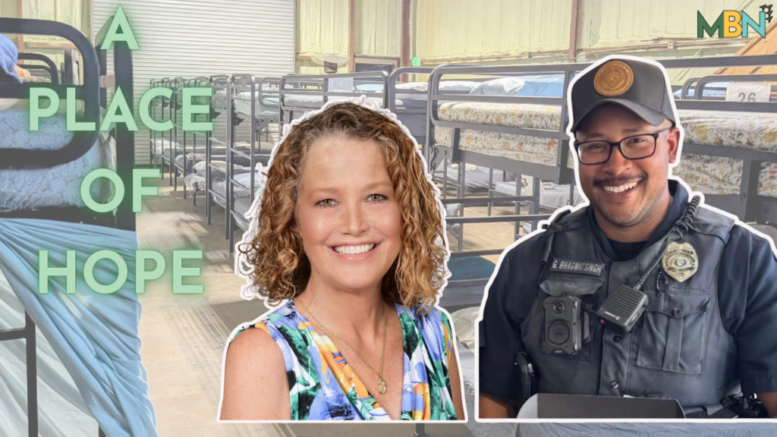
At the center of that effort are Donna Morgan, Director of Homeless Services and Housing at One Hopeful Place, and Officer Gerard Bhagwatsingh — adoringly known to many in the community as “Officer Bhags” — a Community Policing Officer with the Fort Walton Beach Police Department, two professionals with decades of combined experience serving the community.
“Just because you’re homeless doesn’t mean you’re bad,” Morgan said. “A lot of people are here because they simply can’t afford rent anymore.”
Leadership Rooted in Experience
Morgan has spent 24 years with Bridgeway Center, including the last five overseeing operations at One Hopeful Place, which Bridgeway manages on behalf of the Chamber of Community Solutions. One Hopeful Place serves as the only homeless shelter for single adults in Fort Walton Beach, offering both emergency shelter and pathways to permanent housing.
“I love this job. I love the people,” Morgan said. “But it would be nice if one day we didn’t need a shelter — if everyone had affordable housing.”
Officer Gerard Bhagwatsingh has served with the Fort Walton Beach Police Department’s Community Policing Unit for 4.5 years, focusing on outreach, problem-solving, and building trust with vulnerable populations.
“This isn’t about enforcement first,” Bhagwatsingh said. “It’s about compassion, awareness, and getting people where they need to be.”
Cold Nights Trigger a Coordinated Response
When temperatures are forecast to be 40 degrees or below between 6 p.m. and 6 a.m., One Hopeful Place activates its emergency cold night shelter, the Comfort Place, which can house 48 additional people beyond its regular shelter capacity.
Morgan personally tracks weather forecasts daily during the winter months.
“I become the daily meteorologist,” she said. “We don’t want anyone on the street when it’s that cold.”
Once the cold night shelter is activated, One Hopeful Place notifies law enforcement, dispatchers, and community partners. From there, Fort Walton Beach Police officers take the information directly to the streets.
“Our unit knows where many of our homeless community members are,” Bhagwatsingh said. “Some don’t have social media or regular contact with services, so we go find them.”
Community policing officers and patrol units notify unhoused individuals about shelter availability, pickup locations, and transportation times. If someone calls the police late at night and is unable to reach a pickup point, officers will transport them directly to the shelter.
“We’ll get them warmed up and get them somewhere safe,” Bhaghwatsingh said. “I’ve personally driven many people to One Hopeful Place.”
Serving Veterans and Vulnerable Populations
Veterans receive prioritized services at One Hopeful Place, with designated beds reserved in both men’s and women’s shelters. Veterans do not need to prove residency in Okaloosa or Walton County.
“As soon as a veteran arrives, we connect them with the VA and local partners,” Morgan said. “Housing vouchers, treatment, benefits — we start immediately.”
One Hopeful Place works closely with the Veterans Administration, housing authorities, and community partners through monthly “By Name List” meetings to ensure veterans are quickly identified and supported.
Changing Perceptions About Homelessness
Both Morgan and Bhaghwatsingh emphasized that homelessness often looks very different from what public stereotypes suggest.
“A lot of people assume homelessness means panhandling,” Bhaghwatsingh said. “But we’re seeing families with kids who go to school every day and then walk back to a van when school lets out.”
Bhaghwatsingh added that many unhoused individuals walk miles to attend appointments and access services.
“They’re doing a lot of work just to get help,” he said.
Morgan echoed that message, urging the community to show empathy.
“This community has shown us nothing but love,” she said. “We’re here to work together, form partnerships, and help people get back on their feet.”
Faith, Volunteers, and Community Support
Local churches play a significant role during cold nights, providing meals and volunteers. Every Saturday night, Taking It to the Streets Ministries hosts an outdoor church service at One Hopeful Place, complete with dinner, transportation, and overnight shelter when needed. The service is open to everyone — housed or unhoused.
“It’s optional, and everyone is welcome,” Morgan said.
A Shared Mission
Both leaders emphasized that addressing homelessness is a long-term endeavor that requires patience, collaboration, and public understanding.
“This isn’t something that gets fixed in a month,” Bhaghwatsingh said. “It takes time and support.”
For Morgan, the work is deeply personal.
“I feel like I live here,” she said. “But it’s worth it.”
More information about services, volunteering, or donations can be found at www.onehopefulplace.org.
Donation Needs at One Hopeful Place
One Hopeful Place has limited storage space, so they ask the community to focus on a few specific, high-need items:
- Twin-size blankets only
- Twin fitted sheets
- Pillowcases
- Pillows
Due to laundry and storage limitations, queen- and king-size bedding cannot be accepted.
For clothing and household items, One Hopeful Place partners with Goodwill in Fort Walton Beach. Donations dropped off there on behalf of One Hopeful Place are converted into vouchers, which residents can later use for clothing, shoes, and basic household items when transitioning into housing.
These targeted donations help the shelter serve guests efficiently while making the most significant impact.

The post Hope in the Cold: How Local Leaders Protect the Unhoused appeared first on Mid Bay News.

Be the first to comment on "Hope in the Cold: How Local Leaders Protect the Unhoused"