For Gap Creek Residents, Flooding Problems Are Not Wishlist Items
Gap Creek’s flooding problem is no secret to local leaders, environmental advocates, or residents — but despite years of complaints and renewed attention, the creek remains largely unchanged, caught in a bureaucratic cycle where no single entity has taken clear responsibility for a solution.
Gap Creek flows through a complex patchwork of jurisdictions, including unincorporated Okaloosa County, the City of Fort Walton Beach, state-owned roadways, and areas near federal military installations such as Eglin Air Force Base and Hurlburt Field. That overlapping authority has played a significant role in slowing progress, according to community leaders.
Sabu Williams, President of the Okaloosa County Branch of the NAACP, has advocated for funding to fix the multiple issues that plague the area. In a statement to Mid Bay News, he explained that several governments bear responsibility for the issues that take place in the area, which sits at the lower end of the socioeconomic scale, and is inhabited by a higher proportion of minorities than the surrounding area.
“Gap Creek runs from federal property at Hurlburt Field into the City of Fort Walton Beach, then into the county, through the City of Cinco Bayou, and finally out into the bay,” Williams explained, “That means federal property, county property, multiple municipalities, and the U.S. Army Corps of Engineers all have some responsibility for the creek.”
The Okaloosa County Branch of the NAACP has described the situation as an environmental justice issue, noting that Lovejoy and Sylvania Heights are historically Black, lower-income neighborhoods that lack the stormwater infrastructure found in nearby incorporated areas such as Cinco Bayou. Many homes were built decades ago without curbs, gutters, or storm drains, leaving residents especially vulnerable to flooding during even moderate rain.
Water testing has shown Gap Creek is impaired for bacteria, including E. coli and fecal coliform, raising concerns about exposure during flood events. Residents have also reported mold, property damage, and health concerns associated with recurring flooding.
A previous article posted by Mid Bay News says:
“The NAACP report says Gap Creek is impaired by E. coli and fecal coliform bacteria, with levels exceeding state thresholds. The report points to possible sources, including failing septic systems, illicit discharges, animal waste carried by runoff, and pollutants associated with commercial or industrial activity.”
Despite these long-standing issues, responsibility for fixing them is divided among multiple agencies:
- Okaloosa County oversees stormwater in unincorporated areas but does not have a dedicated stormwater utility for neighborhoods like Sylvania Heights.
- The City of Fort Walton Beach manages stormwater within city limits and has invested in drainage and retention projects in nearby neighborhoods, highlighting disparities tied to jurisdictional boundaries.
- The Florida Department of Transportation (FDOT) controls Beal Parkway (State Road 189), where a major drainage pipe collapsed in 2025, underscoring the fragility of aging infrastructure.
- The Florida Department of Environmental Protection (FDEP) regulates water quality and has classified Gap Creek as an impaired waterbody.
- Federal interests, including land associated with military operations near the creek’s headwaters, add another layer of regulatory review and coordination.
Advocates say this fragmentation has led to years of studies, plans, and discussions — but limited construction and on-the-ground improvements. Williams comments on the studies, saying,
“There have been numerous studies done over the years… now we’re being told that they need to do another study… They’re going to sink $500,000 into another study, which is probably going to take a little bit more than a year… We’re saying, ‘Look, I think we have a study. We know what’s going on.’ In fact, you can see the damage… You don’t need a study to see that those things need to be done.”
In late 2025, the Okaloosa County Commission approved $250,000 in funding to match a state appropriation for a comprehensive Gap Creek watershed study. County leaders say the 2025 watershed study is a critical step toward long-term solutions, but for residents who have lived with flooding for decades, it represents another planning phase layered onto a long history of studies that have yet to produce visible change.
County Responds to NAACP Press Release
When asked by Mid Bay News about the continuing problem with flooding at Gap Creek, Okaloosa County’s Public Information Officer Nick Tomecek said that multiple projects are now active in the basin.
“The County does, in fact, have voter-approved infrastructure surtax funds invested in the Gap Creek area,” said Public Information Officer Nick Tomecek, “We have four major projects currently active, totaling millions in investment for the Gap Creek areas such as Sylvania Heights, Echo Circle, and Overbrook.”
County officials describe the study as the first comprehensive master plan in nearly two decades. The NAACP and community groups welcomed the study, but stressed that residents have seen plans come and go before.
Community advocates like Williams have also raised concerns about equity, claiming none of the county’s infrastructure surtax funding to date has been allocated specifically for stormwater improvements in Sylvania Heights, despite decades of documented flooding.
“We received a report from the county… they raised over 270.9 million dollars in surtax. I asked if any of the surtax funds would go towards the Sylvania Heights issue or repairing Gap Creek? And the answer has actually been no,” Williams claimed.
While residents in neighborhoods like Sylvania Heights have voiced frustration over the lack of visible improvements, county officials say significant investment is already underway.
County officials shared a breakdown of projects and their funding sources tied to the Gap Creek basin. Tomecek noted that residents can view all current and completed infrastructure surtax projects through the County’s online portal.
At its core, the Gap Creek situation underscores a broader question facing many communities: when a problem crosses city, county, state, and federal lines, who is ultimately responsible for fixing it?
Community activists such as Sabu Williams say they will continue pushing to keep Gap Creek flooding at the forefront of public discussion. Although funding has been approved for multiple studies, residents in neighborhoods like Sylvania Heights say they have yet to see tangible improvements.
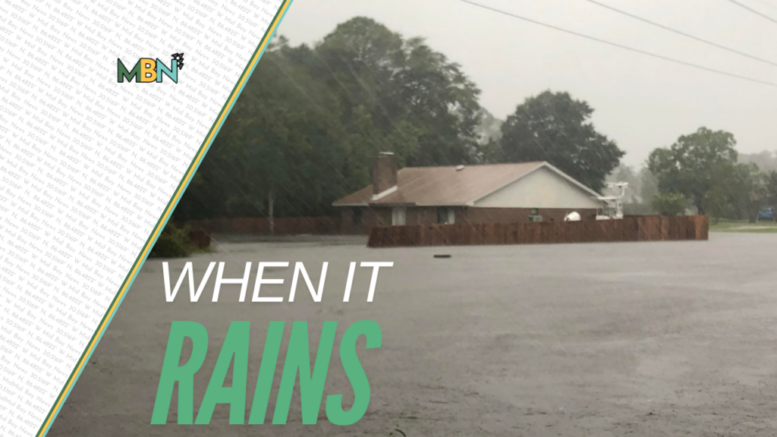
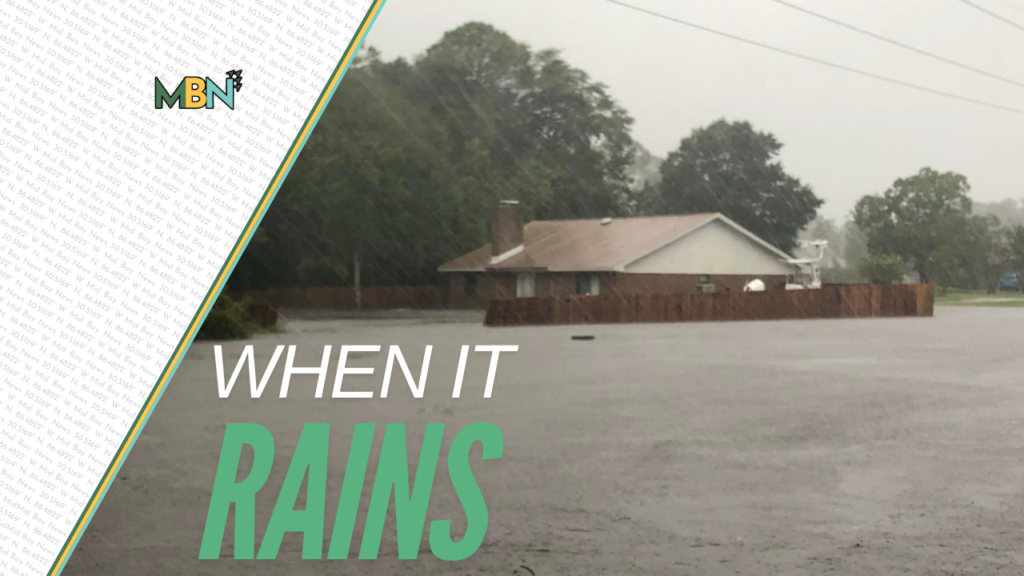
For residents who live along Gap Creek, the issue is not theoretical. It is not a wishlist item for future budgets. It is a recurring reality that returns every time it rains.
Mid Bay News reached out to the U.S. Army Corps of Engineers for comment. As of the publication date of this article, the agency has not responded.
(Photo by Chris Redmon, Jonquil Circle)


The post For Gap Creek Residents, Flooding Problems Are Not Wishlist Items appeared first on Mid Bay News.

Be the first to comment on "For Gap Creek Residents, Flooding Problems Are Not Wishlist Items"