

Tour + your questions answered about Niceville’s new turf field
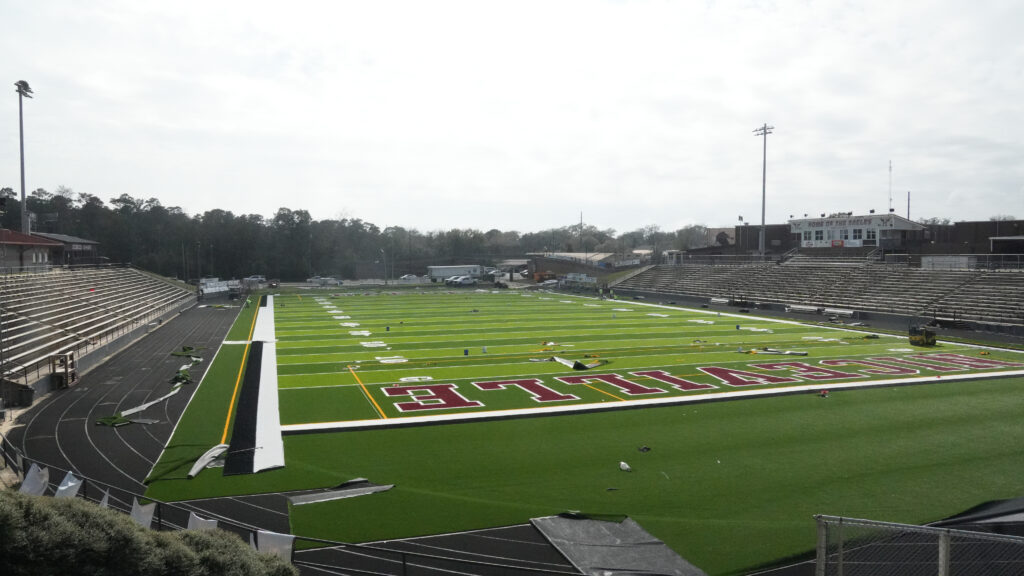
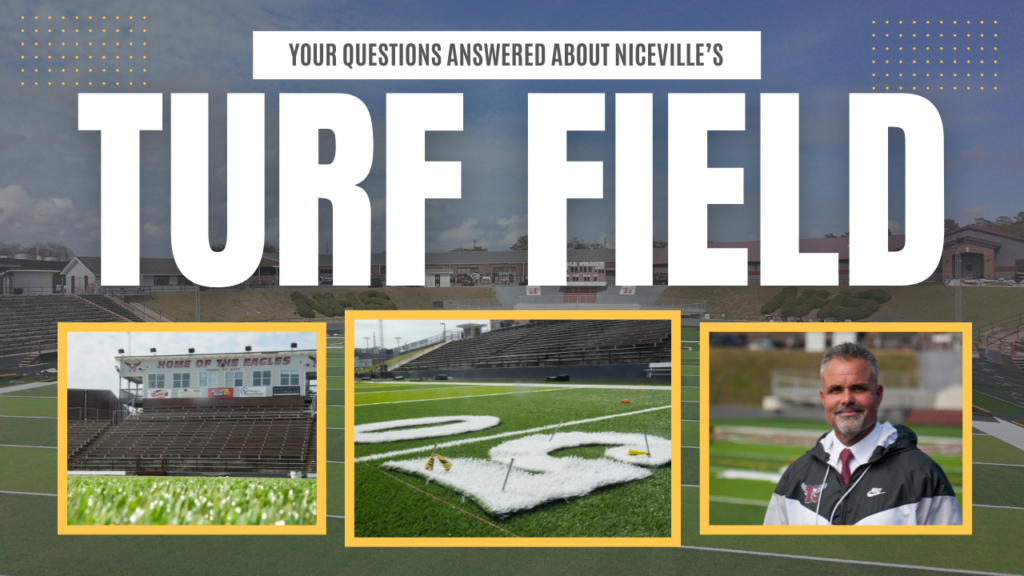
Niceville Principal Charlie Marello says the new turf field, part of a district-wide $5.3 million project, will wrap up and be ready to use by the first week of March.
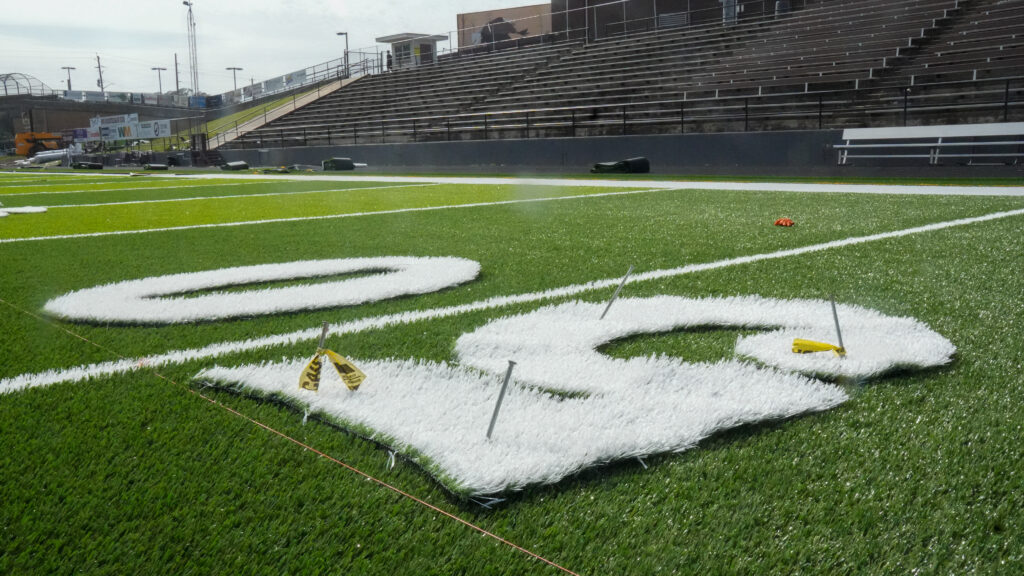
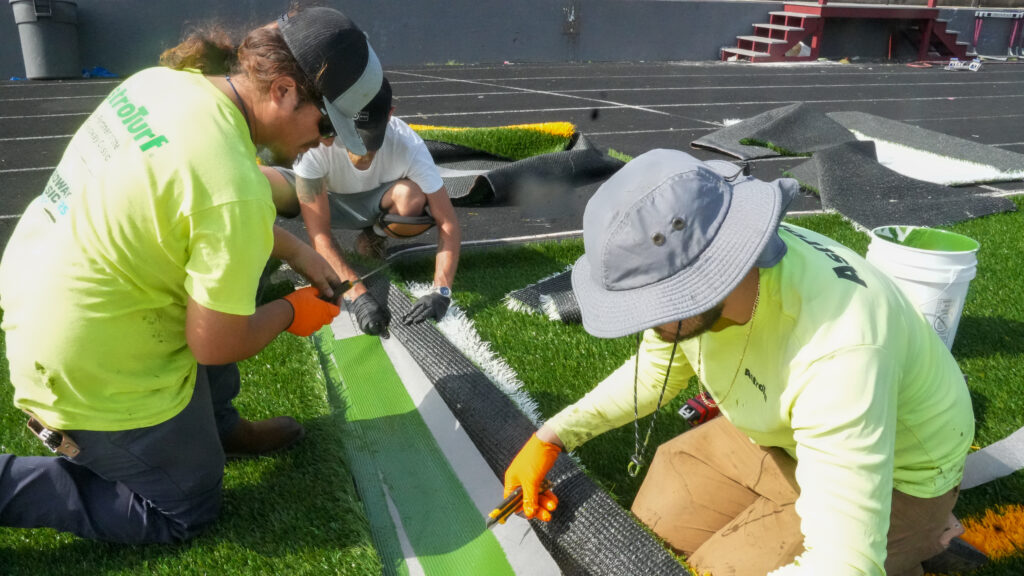
The new field features a couple of layers of materials. At the base, graded shards of stone keep the surface flat while allowing water to drain. The turf material gets laid on top after that. Each hash, number, and line are painstakingly cut out by the installers and laid into the ground. Lines of string, raised in the air by little sticks cover the field to make sure everything stays in their mathematically correct position on the field.
Lines for the lacrosse, soccer and other sports are inlaid in a orange-gold on either side of the field.
In the northern endzone, ‘Niceville’ is spelled out in block letters. To the south, the word ‘Eagles’ will greet running backs, wide receivers and defensive backs lucky enough to snag a pass and take it back for six points.
Workers apply a thick, gooey green past to the turf that allows it to stick down permanently while im at the field.
After the turf is settled come the millions upon millions of tiny rubber pellets.
While the pieces of turf are pasted into the ground – there are plenty of questions about the field that many around town (at least evidenced by the peanut galleries of social media) feel haven’t been answered.
So, I went and asked Principal Marello about them. Here’s what he told me:
Financial Incentives for Niceville High School
Christopher Saul (MBN): What is the financial tradeoff for switching from natural grass to artificial turf? Are there any additional costs associated with the turf field? If so, what are they, how much are they, and how do they compare to the costs of a natural turf field?
Principal Charlie Marello (Niceville High School): “Each spring, we typically have to replace a significant portion of our natural grass field due to heavy wear from year-round athletic use. Ongoing maintenance costs for a natural field include sod replacement, fertilizer, irrigation, field paint, lawn equipment, and routine repairs. While exact figures vary year to year, those recurring maintenance expenses are substantial over time.
Artificial turf requires minimal maintenance and replacement, typically every 10 to 12 years. However, because the infrastructure is already in place, those costs are significantly lower than the original installation. Overall, artificial turf reduces ongoing maintenance demands and provides a more durable, year-round playing surface.
Note: Principal Marello estimated that the periodic rehabbing of the field costs roughly $250,000 and takes place every 10-12 years. Principals are expected to save up for the rehab in their budget over the decade’s use of the field.

Social media blowback and field funding
Christopher: The school board voted to construct artificial turf fields, which caused some rancor on social media about the costs of the fields. Can you reiterate what you told me about capital funds and how they work, as it relates to this field?
Marello: “The funding for the turf field comes from capital outlay dollars, which, under Florida Statute 1011.71, can be used only for construction and facility improvements, maintenance, and capital expenditures. These funds cannot be used for teacher salaries, additional staff, or classroom materials.
Several recent capital projects across the district were completed under budget, creating available capital funds that could be reallocated to other eligible construction needs. The superintendent and district leadership asked schools to identify priority facility needs, and improving our athletic field was at the top of the list, as was the case at the other high schools. These projects are being funded entirely through those restricted capital dollars.”

Artificial Turf Field Injuries
Christopher: Do artificial turf fields cause more injuries than natural turf fields?
Marello: “Student safety is our top priority. Our high school field supports freshman, junior varsity, and varsity athletics, as well as middle school programs. With that level of year-round use across multiple sports, natural grass surfaces experience significant wear and deterioration.
As fields become uneven and heavily worn, surface stability can become a concern. In fact, during a past playoff match, the visiting team initially expressed concern about field conditions during warmups. While officials ultimately deemed the field playable, the situation highlighted the challenges of maintaining a natural grass surface under heavy use.
Artificial turf provides a more consistent and durable playing surface that better withstands the demands of both high school and middle school athletics. We appreciate the district’s commitment to providing safe, high-quality facilities for our student-athletes.”

Ability to host more events for community groups and more
Christopher: What other information do people need to know about the artificial turf?
Marello: “One important factor for our campus is safety beyond athletics. The Eagle Pride Marching Band has nearly 300 students who currently cross Palm Boulevard multiple evenings each week to access practice space. Using the turf field on campus helps reduce that safety concern and keeps students on school grounds.
Additionally, the durability of turf will allow us to support middle school programs better and potentially host youth and community events when scheduling allows, without the significant wear concerns associated with natural grass. Overall, this project improves safety, increases flexibility, and expands opportunities for both our students and the broader community.”

The post Tour + your questions answered about Niceville’s new turf field appeared first on Mid Bay News.

Be the first to comment on "Tour + your questions answered about Niceville’s new turf field"