Judge makes key ruling before critical Fort Walton Beach referendum
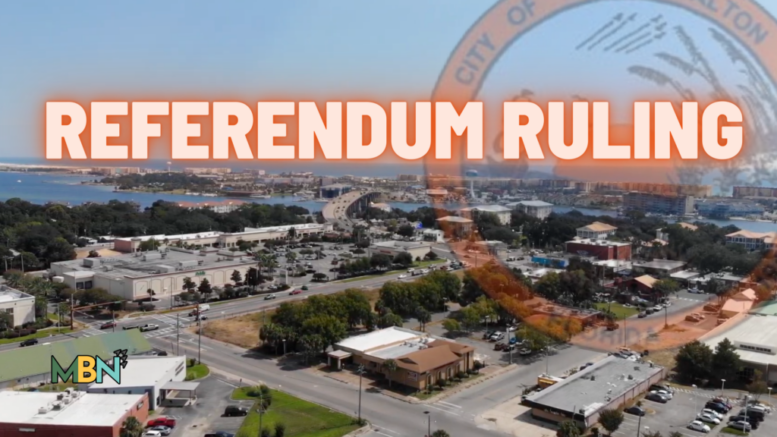
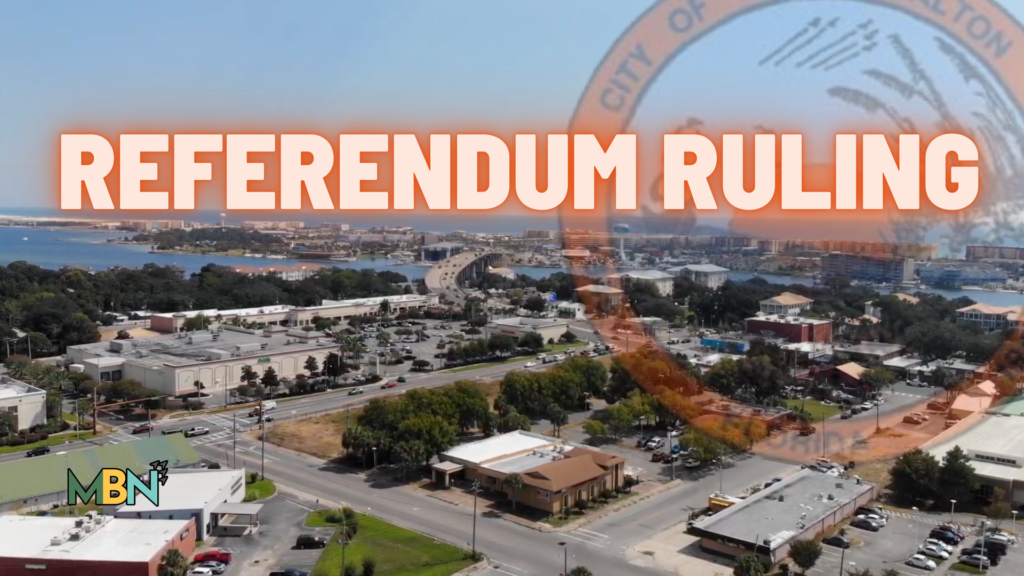
Judge William Stone has issued a preliminary ruling on the motion to stop the referendum on a handful of ballot measures before Fort Walton Beach voters next week.
While the voting will still take place, Judge Stone ruled that many of the referendum questions posed to the electorate obfuscated the measure’s true intent and therefore did not meet legal requirements for a valid poll question. These proposed amendments aimed to do everything from enshrining the necessity of an independent fire and police department to increasing the residency requirement for City Council candidates from six months to a year.
Early and mail-in voting has already begun in The Camelia City – one of the reasons Judge Stone decided not to enjoin the Supervisor of Elections and the City of Fort Walton Beach from proceeding with the election – but he added some caveats:
More below
- The court will make a final decision on whether the ballot questions were legitimate at a hearing held after the election.
- The Supervisor of Elections and Fort Walton Beach Canvassing Board will conduct the elections, but not certify them until after the conclusion of this legal fight – including all appeals.
- None of the results from the vote are to be publicly announced by the Supervisor of Elections on their website or anywhere else. Stone acknowledged that the results cannot be withheld from the public, so he required that they be requested from individuals (or intrepid online news outlets) and provided to them.
Stone said the emergency request for an injunction to stop the vote required the plaintiffs, in this case, the Fort Walton Beach Watch Group and former councilman Travis Smith, to clear a high bar. While he said they cleared it, he still wanted to allow the vote to move forward.
“It’s not a huge deal, nothing has been struck,” said Fort Walton Beach Councilman Ben Merrell, “The election is still on. It’s very important that people still go out and vote and in my opinion, ’yes’ on these amendments, so that we can see our city still succeed and thrive. All that’s happening [with this case] is that after the election, the judge has agreed to hear further argument. That’s it. The election’s still on. Nothing’s been struck. This isn’t some huge victory for those opposing it.”
Payne Walker, another Fort Walton Beach Councilman and an opponent of the charter amendments, saw it differently on Friday when we spoke to him about the order. He says that the judge’s ruling is writing on the wall: The amendments that were enjoined will likely not pass legal muster and will see defeat in the courtroom. Still he believes that his fight against the forces that created these proposed amendments isn’t over. “if they want to go forward and try third bite at the apple, they’re going to have to re write the ballot language,” Walker explained, “The judge has told [the charter amendment supporters] what you did, and the only thing that’s going to remain on the ballot is your self serving, intent [to give] yourself pay and compensation. I hope that it’s staying on the ballot. It’s clearly going to stay there, but I hope they get their asses kicked on that too. I hope the voters tell them, ‘No, you’ve been deceptive. We don’t trust you anymore, and we’re going to bring it to you at the ballot box.’”
The Questions on the Ballot
What did Judge Stone rule on? The Fort Walton Beach City Council appointed a group of residents to a charter review committee last year to review the charter and make recommendations for updates. Many times, a review committee will make recommendations to the charter to remove parts and pieces that are no longer needed (requirements to tie up your horse before you head into the saloon, for example) but are still in the charter.
READ JUDGE STONE’S RULING ABOUT FORT WALTON BEACH CHARTER AMENDMENTS IN IT’S ENTIRETY HERE
In this case, the review committee proposed sweeping changes to the charter, and the city council voted to place them on the ballot as ballot questions.
In his order on the measures, Stone explained that each measure on the ballot, which may be no more than 75 words, must closely align with the proposed changes. He used a two-part test outlined in Florida State Statute 101.161 that requires two things:
- The ballot and summary must fairly inform the voter of the amendment’s chief purpose and…
- The language on the ballot cannot mislead the public.
For example, if a measure said by a vote of ‘yes’ would allow citizens to get rid of the horse ordinance I mentioned above, but if it actually gave the council license to form a city militia, it would be an illegal referendum question.
“Reduced to colloquial terms, a ballot title and summary cannot ‘fly under false colors’ or ‘hide the ball’ with regard to the true affect [sic] of the amendment” Stone explained, “a ballot summary hides the ball when its chief purpose is obscured and the legal effect of approving the proposed measure is impossible to ascertain by reading it.”
Several of the ballot questions could be considered more administrative in nature. For example, the residency requirement for running for office would increase, and the process for punishing councilmembers who don’t show up for meetings would shift from an internal procedure to one involving the governor and the state senate. Those two ballot questions were negatively reviewed by Judge Stone, who said both had ballot language that was “clearly and conclusively defective,” and that the Plaintiffs, FWB Watch Group and former Fort Walton Beach Councilman Travis Smith, “demonstrated substantial likelihood of success on the merits concerning their challenge.”
Police and Fire Forever?
Ordinance 2198, or the fourth of five questions on the ballot, appeared to be, in Judge Stone’s written opinion, the poll that deviated the most between what the ballot language said and what the charter amendment would actually do. The ballot question asked voters if the charter should “amend outdated language, provide clearer descriptions and enhance the efficiency of the City’s daily operations?”
The change proposed was more specific than that. The amendment would create a permanent place in the charter requiring the city to fund an independent fire department and police department – a pain point for individuals in Fort Walton Beach’s civic life who’ve suggested doing away with the police department and signing a contract with the Okaloosa County Sheriff’s Office for law enforcement services, similar to the City of Destin.
The proposed amendment would have changed 11 sections of the city’s charter, something Judge Stone argued had the city “doing too much with too little.”
In fact, Judge Stone saved the lion’s share of the vitriol in his ruling for this particular amendment. “It is misleading such that a voter would perceive it as a minor housekeeping amendment, when in fact the amendment would achieve a substantial change to the charter by imposing a requirement that the city maintain autonomous fire and police departments,” he wrote in his ruling.
Pay for city council members
Proposed ordinance 2199 became the only one of the proposed amendments spared Judge Stone’s preliminary veto. This one, he noted, was pretty straightforward; the measure, if passed, would reintroduce pay and benefits to the council.
Limitation on budget expenditures
This is the proposed amendment you’ve probably heard the most about – I know it’s the one everyone talks to me about. This proposal, if it were passed, would have removed the budget increase cap that the voters passed in 2024.
Judge Stone, for his part, ruled the language on this ballot “misleading and flies under false colors,’ because by stating that Section 35 does not limit increases to property tax millage rates, a reasonable voter reading the ballot language could conclude that the repeal of Section 35 will have the effect of limiting increases to property tax millage rates.”
Stone wrote that he found the language “clearly and conclusively defective.”

The post Judge makes key ruling before critical Fort Walton Beach referendum appeared first on Mid Bay News.

Be the first to comment on "Judge makes key ruling before critical Fort Walton Beach referendum"