Panhandle Butterflies of Fall and the Plants They Love
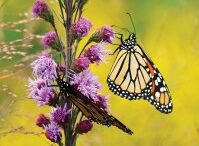
[[{“value”:” By Helen Petre Blooms of fall bring butterflies, gathering sweet nectar provided by the colorful flowers. Nectar provides energy for migration and egg production. Flowers and butterflies are abundant on recently burned pine savannahs, where flowers have sun and room to bloom. Gulf Fritillary (Dione vanillae) The most common butterfly in the fall is the Gulf Fritillary, which lays its eggs on passionflower (Passiflora incarnata), so the caterpillars can eat the leaves. While Gulf Fritillaries use lantana and other flowers for nectar, lantana is an invasive nonnative and poisonous to animals. Since animals cannot eat the leaves, nothing inhibits its invasive spread. The adult Gulf Fritillary lives for only two weeks. Adults migrate north in spring and south in fall. Gulf fritillaries, like monarchs, have chemical defense mechanisms, which make them unpalatable to predators. Monarchs on Liatris. NC State Extension Blazing star (Liatris species) Gulf Fritillaries are especially attracted to Liatris, feeding on nectar before their southern migration. Liatris attracts other butterflies, such as swallowtails, hairstreaks, monarchs, and buckeyes, as well as native bees and moths. There are many species of Liatris native to Florida, and different species often grow together in dunes and pine savannahs. Common names include blazing star and gayfeather. All have lavender flowers and bloom from August to October. Liatris grows best in disturbed areas and scrub, areas prone to wildfire, and recently burned areas. If there is no disturbance, pines overgrow, preventing sunlight from reaching the ground, and preventing Liatris from growing. This demonstrates...
Read More